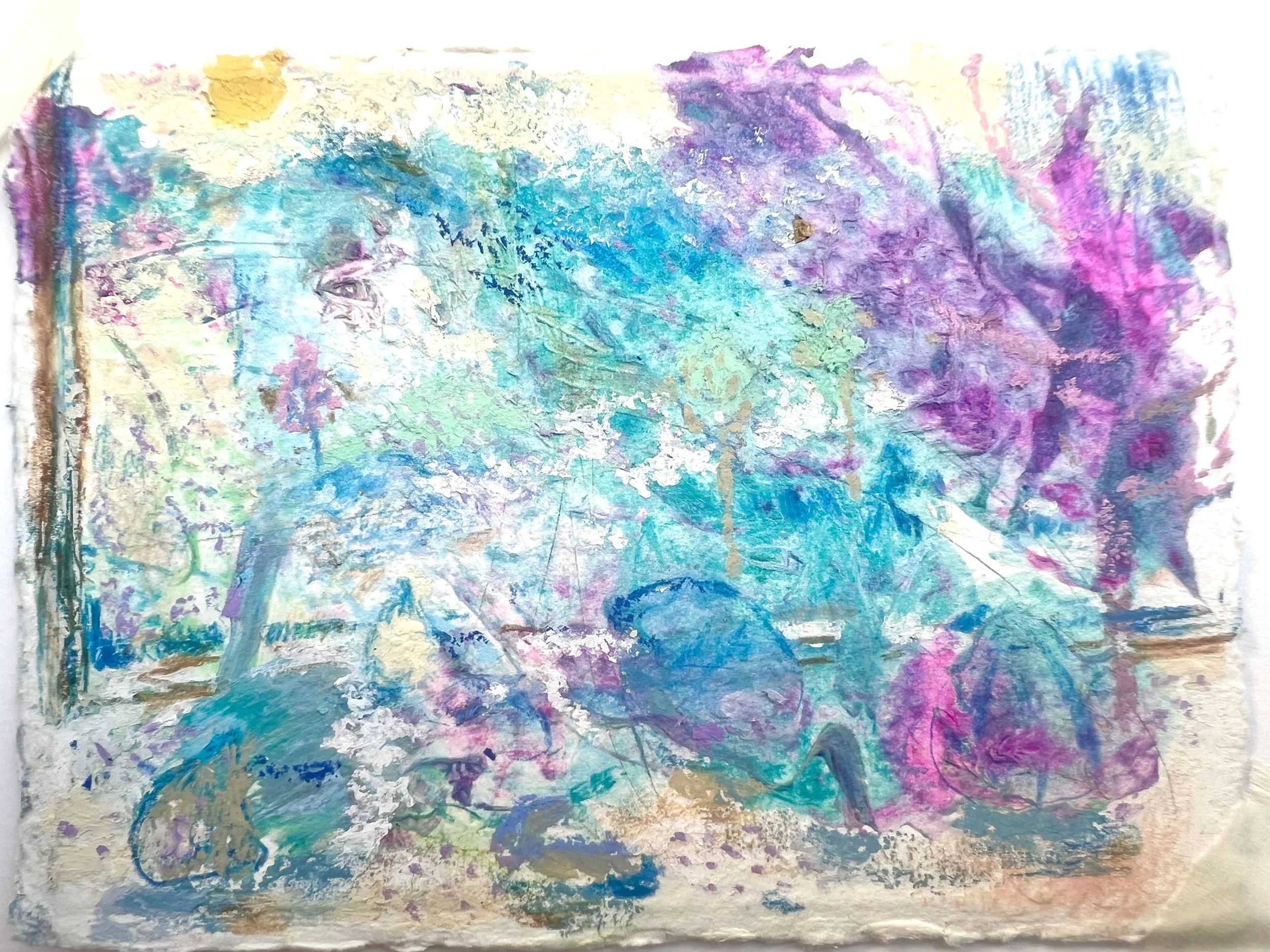
Vision isn’t as useful as I think.
When we look at the world, or at a painting, what is it that we’re really seeing? Are we interpreting it through the lens of our survival instincts, or are we observing it with a clear, unburdened gaze?
Every painter spends time in front of paintings that feel unresolved and uncomfortable. We keep painting with optimism, trusting that what looks awkward now will eventually find its way to where it needs to be. Much of painting is simply learning to live with uncertainty.
The trouble comes when we bring that same optimism to someone else’s work and dismiss it as “not much”. That can be a rather hasty judgement. More often than not, it’s the mind searching for reassurance, convincing itself that the painting can’t be all that difficult.
It’s only when you try to paint it yourself that you realise how deceptive seeing can be. What our eyes perceive, what the brain translates, and the opinions we form afterwards are, to a large extent, projections of our own responses.
With practice, those projections begin to loosen their grip. That’s where the real added value lies: not simply in becoming more skilful, but in becoming more objective.
A quick sketch
the world outside of window