Morning, Instagram. Goodnight, Insta.
Artists tell their stories in their own unique ways. But somehow, these days, Instagram has become the one place where all those unique stories get sorted into categories. Perhaps many artists have ended up having a closer relationship with Instagram than with their own partners.
I Am the Painting
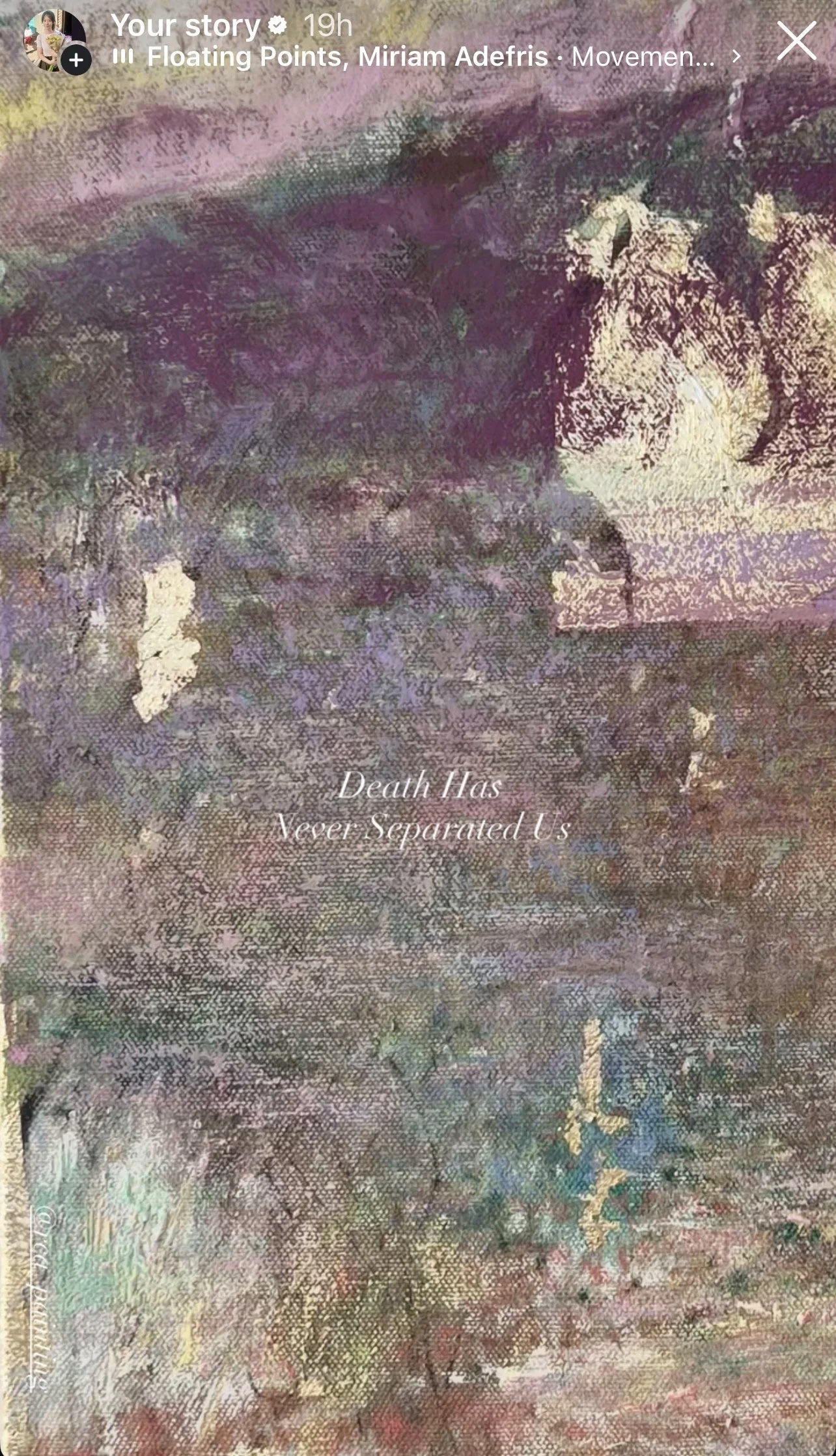
I felt like I was flying inside this painting, becoming one with the colours.
Sometimes I want to be part of the painting so much that I’ve even eaten paint. Oil paint tastes bitter, but I’ve always liked bitter things.
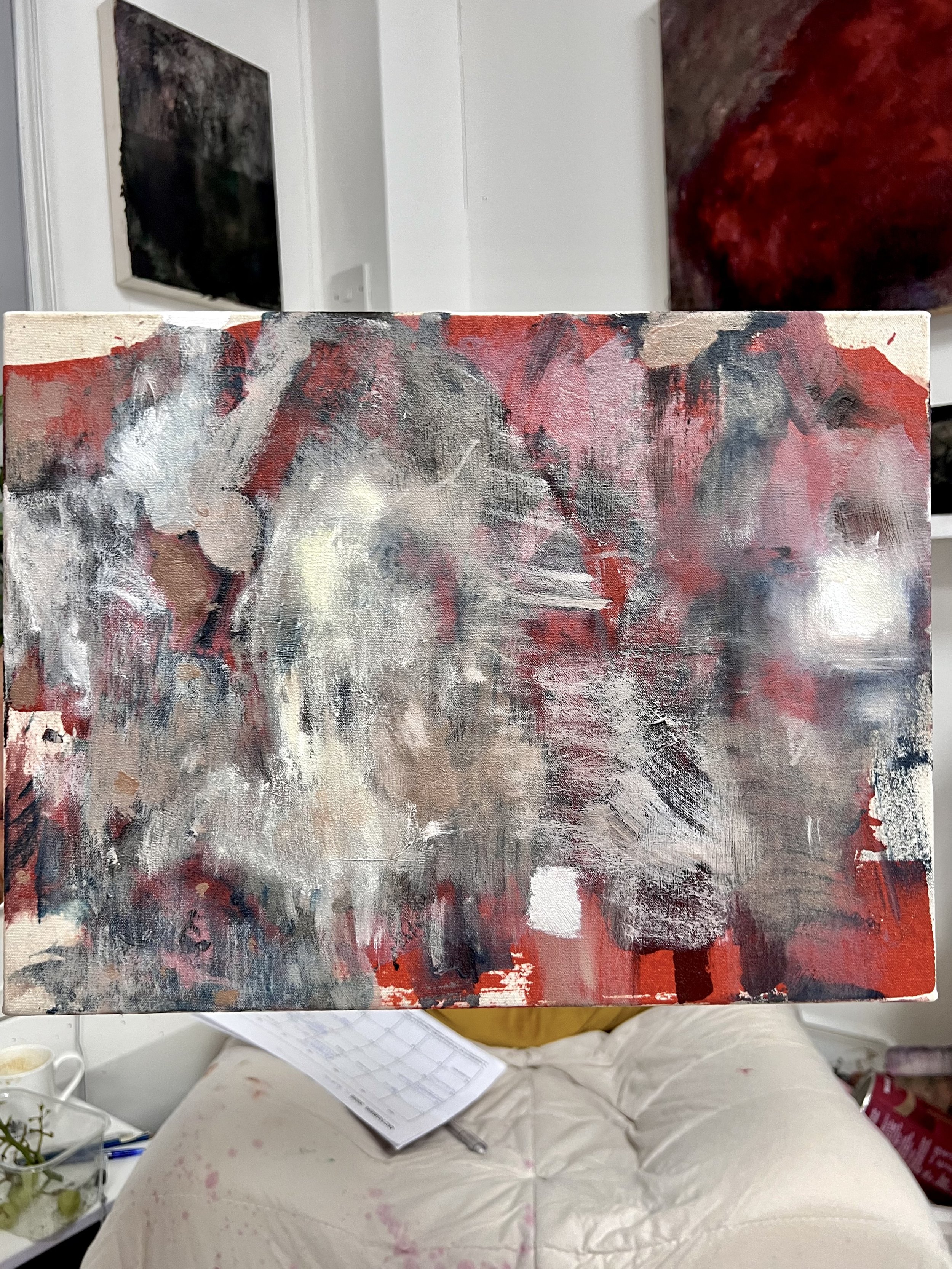
For now, this temporary body is my home
In a way, time isn’t linear to me at all. I often feel as though I already know what’s going to happen, and I’m simply waiting for it to unfold. But then, even waiting doesn’t really feel like waiting any more.
Most days, I don’t have much to look forward to. There are only two things that make me want to stay in this world. One is my love for my parents. I couldn’t bear to break their hearts. The other is that painting is such a beautiful thing.
A simple wish that isn’t so simple after all
If one day I no longer have to tell myself to smile, that would be a kind of happiness in itself.
But I know that a smile is also a small act of kindness. It can bring a little warmth to others, especially in a world that can sometimes be cruel and bored.
Perhaps I just need to find more fuel for my smiles.
The Self I Had Forgotten
To me, the gift London has given me is the space to slowly rediscover, through painting, those parts of myself that were once overlooked and never truly cherished.
Again and again, I see the rough marks left by the brush in my hand, while in my ears I still hear a teacher’s voice from my childhood telling me that these were failed brushstrokes.
I keep brushing the canvas, again and again and again, wanting the marks to become rougher still. And somehow, as I continue, the memory of being told that I had failed begins, little by little, to fade.
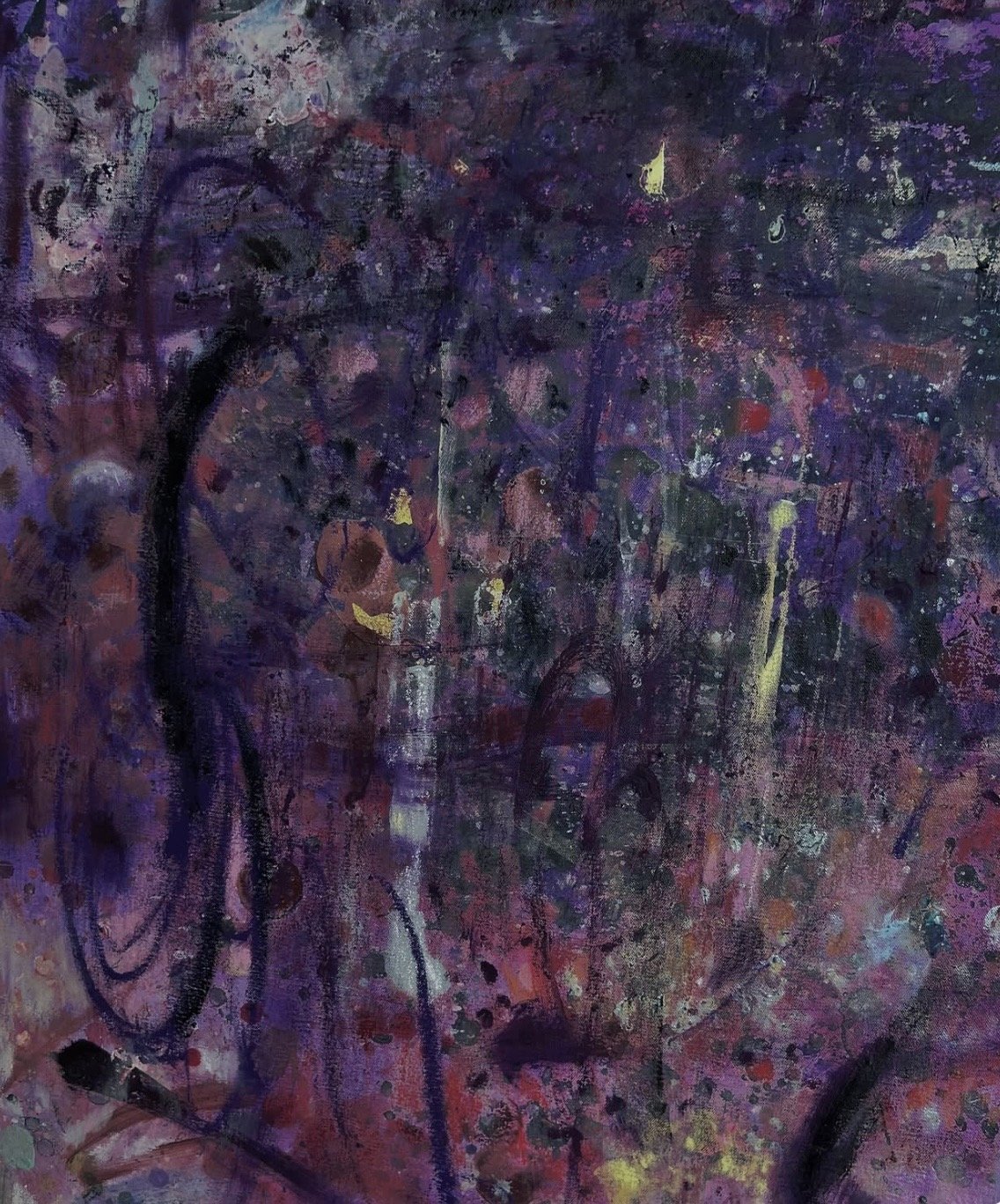
A quiet sense of happiness
After I finished painting today, I sat on the platform at 11.30 tonight, on my way to yours. It was 16 degrees and a little chilly, and I hadn’t dressed warmly enough, so I wrapped my arms around myself.
A train rushed past. I watched the people inside, lit by the carriage lights, and felt a sudden happiness rise in me. How lovely it is to be able to catch a train and go home.
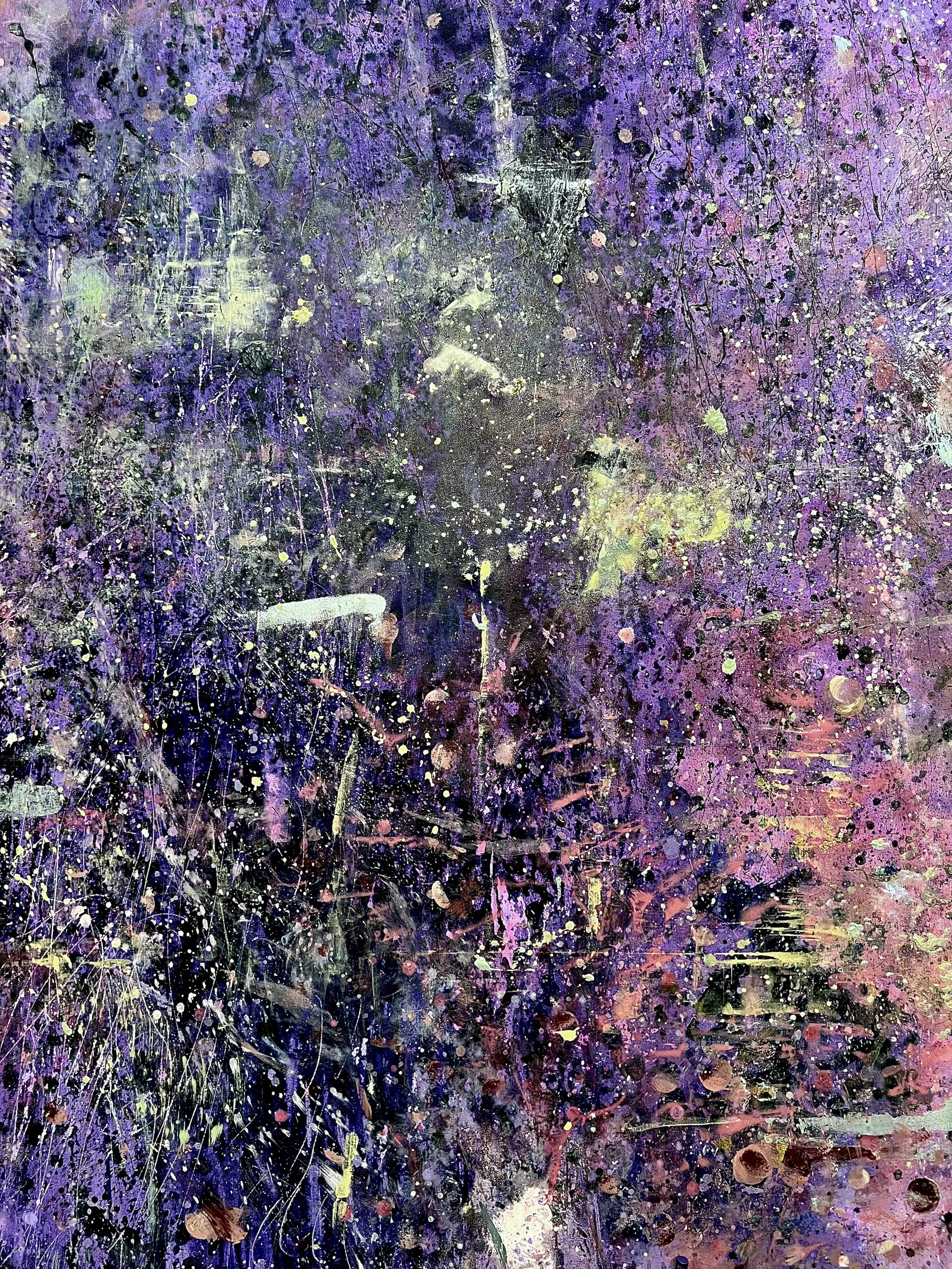
Studio Notes
A few days ago, I finished a stage of a painting. When I came back to the studio the next morning, sunlight was falling across it. I stopped and stared. I knew it was my painting, but I could hardly recognise it.
I remembered making the marks, covering parts of the surface and letting others show through. I remembered how it had looked when I left it. Yet in that light, the marks seemed to have come together into something whole. I sat down and stayed with it quietly, though I felt anything but quiet inside. Later, I lay on the floor beside it. I held it and touched its surface, as though I were getting to know someone again. We had only been apart for a night, but I felt almost as moved as if I were seeing a daughter I had lost touch with ten years ago.
I kept wondering how I could know, so certainly, that I had made it and still feel that I didn’t recognise it.
In On the Relation of Analytical Psychology to Poetry, Jung describes a work taking shape in the artist’s mind as something with a degree of autonomy. Read Jung’s essay. I take this as a way of thinking about the creative process, rather than a claim that a painting has a mind of its own. I made this painting, but I couldn’t have known exactly what all those marks would become together. While I was working, I was too close to it. After a night away, I could look at it almost as I might look at someone else’s work.
The psychologists Dacher Keltner and Jonathan Haidt describe awe as an experience that exceeds our usual way of understanding things and asks us to adjust it. The sense of something being “vast” need not be about physical size; it can also be about meaning. Awe, in their account, may involve unease as well as beauty. Read “Approaching Awe”. Perhaps that is why the painting unsettled me. The canvas had not grown larger overnight. I had simply found that my idea of it was too small.
William Blake wrote of seeing “a World in a Grain of Sand”. Read Auguries of Innocence. For a moment, the painting felt a little like that. It was still a canvas in my studio, but it seemed to hold time, feelings and memories I had never set out to put there. I recognised the brushstrokes, yet they led me somewhere unfamiliar.
That mixture of familiarity and strangeness brought to mind Freud’s essay The Uncanny, in which he considers how something familiar can come to feel strange. Read The Uncanny. I am borrowing that description of a feeling, rather than trying to draw any conclusion about my own memories. What disturbed me may simply have been that the painting was mine, while no longer feeling entirely within my grasp. I could recognise its parts. I needed more time with it as a whole.
So I stopped working on it. I know a surprise can be a happy thing, but looking back, surprises have often struck me with more force than I expect. I feel at times like a thin sheet of washi paper: even good news can pass through me like an arrow. Only the day before, the painting had been changing under my hand. Now it was meeting me with a new face. The parting and the reunion had happened too quickly for me to keep up.
I began to stay away from the studio. For a few days, I could hardly bring myself to go in. Still, I carried the painting’s marks with me. It felt as though an invisible cord ran between us. I needed some distance, but I remained attached to it. Perhaps holding and touching it was my way of feeling that connection again. It had become strange to me, and I wanted to get to know it slowly.
When Keats wrote about “negative capability”, he valued the ability to remain with uncertainty and mystery without hurrying towards an explanation. Read his letter to his brothers. I would like to learn to look in that way. I still don’t know where the next mark should go, and I’m not quite ready to enter the studio every day. For now, this pause feels part of continuing the painting. I need to sit with it for a while, let myself feel both the surprise and the unease, and give myself time.
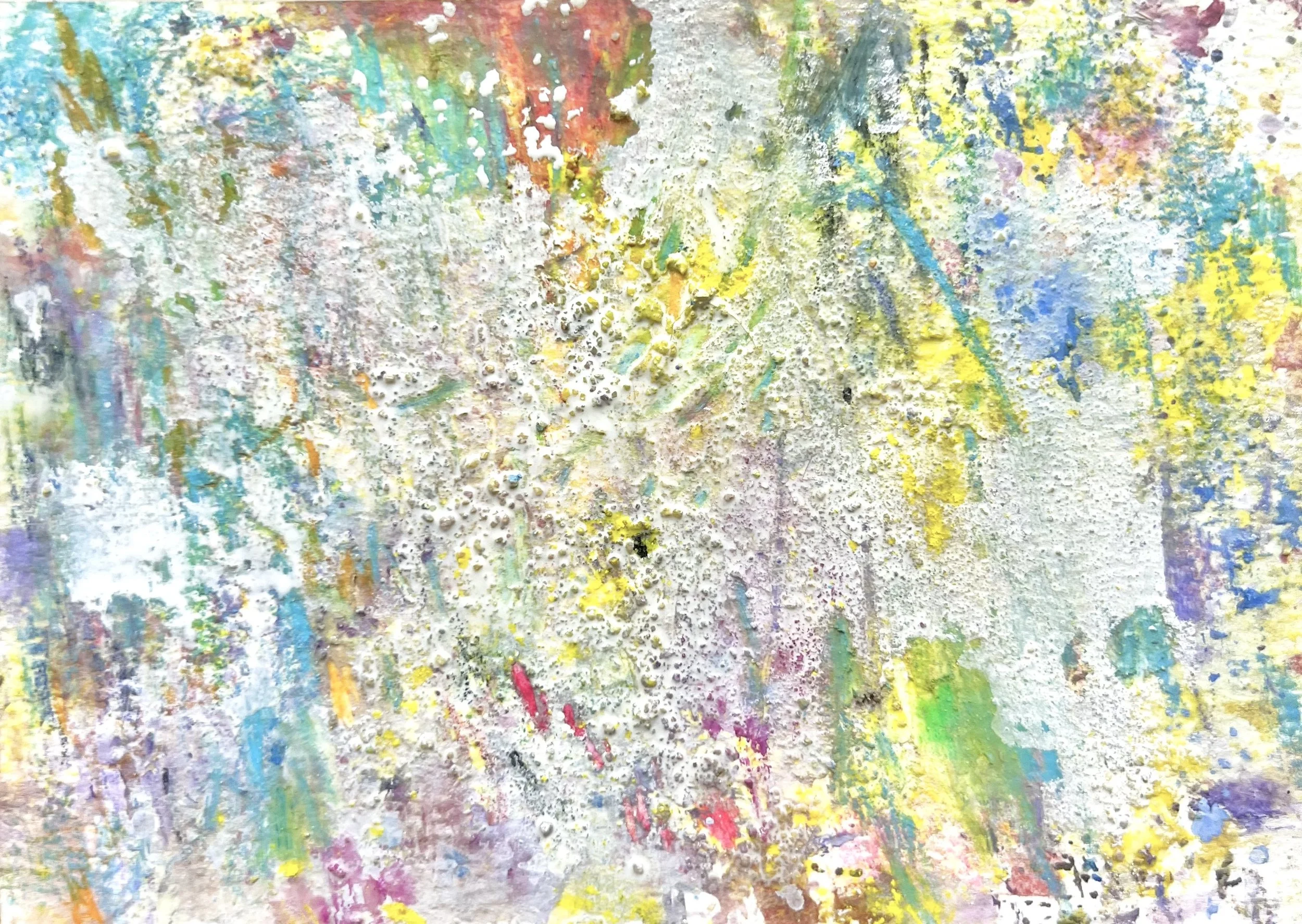
Early Autumn in London
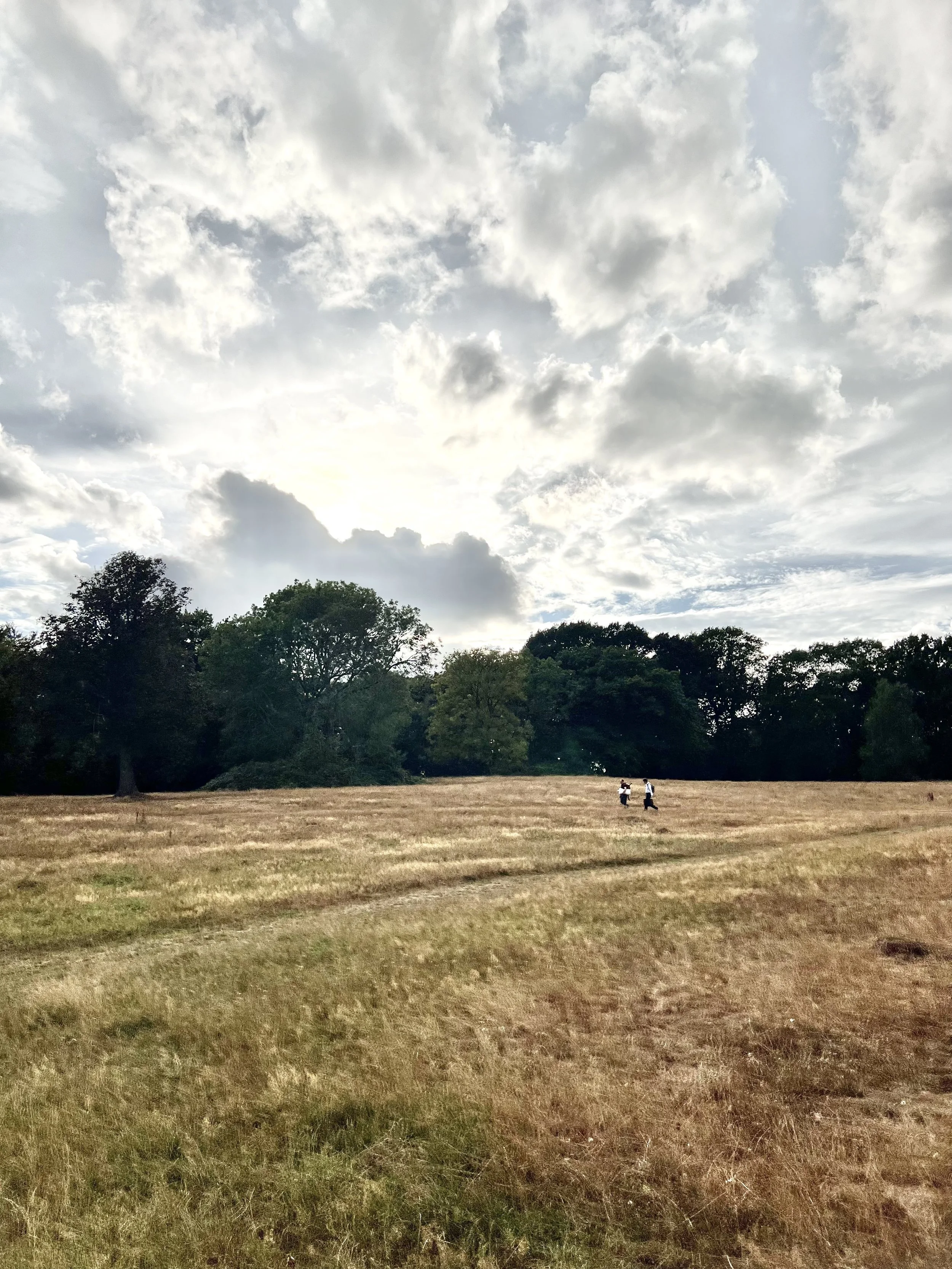
This scene reminds me of Van Gogh walking through the fields with someone who would help carry his painting things when they went out to paint together. At a time when Van Gogh believed so deeply in what he was doing, yet was also living with an enormous sense of disappointment and loss, this person believed in him, encouraged him and listened to him. In many ways, he became a quiet source of strength for Van Gogh, someone who gave him the support and motivation to keep going.
I think Van Gogh’s paintings say quite a lot about how determined and stubborn he was. He clearly felt things very deeply, and yet somehow managed to keep going, often in quite profound isolation. I think there was something incredibly strong about him.
Hampstead Heath
Seeping into the life of a place
Lately, I’ve been living without paying much attention to the time, and my world has begun to feel different. My body seems to know what needs to be done, and somehow leads me towards it.
When I was working, so much of my life revolved around pleasing clients. That no longer exists in my life. That alone feels like a return to something more natural, and now I find myself turning further inwards.
The studio is finally nearing the end of being sorted out. My hands are scratched and bleeding from all the moving, cleaning and arranging. I’m exhausted, but very happy. It’s been hard work, but I find myself humming as I go, lying on the floor when it gets too hot, nodding hello to the neighbours, watering the plants. Little by little, I’ve also become familiar with the people in the shops nearby, and even some of their regular customers. Everything seems to be happening so naturally.
I feel as though I’ve found a rhythm, and I’m simply moving with it.
Paintings Carried by Quietness
I’ve gradually come to realise that what I’m looking for in painting is a certain quality of quietness. Nietzsche once wrote, “Profound suffering makes noble: it separates.” I often think about that sense of separation. Suffering has changed the distance between myself, other people, and the world around me. In doing so, I’ve also begun to see the shape of myself more clearly. For a long time, my intuition felt almost too sharp, and I learnt to soften or conceal it simply to live and find my way in the world.
Hope and fear, calm and desire, tenderness and darkness are rarely so clearly defined. They’re often blurred by our motives, which can shift depending on all sorts of circumstances. Honesty and transparency, I think, are rather rare qualities. So these seemingly contradictory things often exist side by side, sometimes within the very same moment.
But I’m not particularly interested in painting those experiences directly. What matters more to me is what happens to them once they enter a painting. A figure from memory, a room, a tree, an afternoon, or something I’ve only caught a glimpse of can all become the beginning of a painting. Once I start painting, parts of these things gradually disappear. Forms become less certain, colours begin to shift, and something remembered slowly becomes something imagined. At some point, I’m no longer quite sure where the memory ends and the painting begins.
I think this is where intuition becomes important to me. When I begin a painting, I rarely know exactly what it should become. I prefer to respond to what is happening on the surface. A colour can change the weight of a figure. A blurred edge can sometimes make something feel more present rather than less. Covering an image can bring it back to life, and sometimes a small area of paint is enough to change the direction of the whole painting. At a certain point, thinking too clearly can begin to get in the way. I trust that when something feels right, I’ll recognise it, even if I can’t quite explain why. Sometimes, I just know.
Technical skill, different subjects and striking compositions can all be deeply pleasurable. But these days, I don’t find myself particularly drawn to any of those directions. What interests me more is whether I can arrive at a very delicate kind of balance within a painting, a relaxed sense of stillness. A finished painting might look relaxed, perhaps even effortless, but for me that sense of ease is actually very difficult to arrive at. If it becomes too clear, the painting begins to explain itself. If it becomes too vague, it can dissolve into atmosphere. Too much emotion and it risks becoming sentimental. Too much restraint and it loses its pulse. It’s quite a narrow path.
Perhaps that’s why I keep returning to very ordinary moments in life. They seem to be able to hold far more than they first reveal. For me, perhaps this is where stillness begins. It isn’t an absence of feeling. It’s a place where different feelings are allowed to exist at the same time.
I don’t particularly want to become what people imagine an artist ought to look like as well. I’m quite happy to remain a fairly ordinary looking person, living a fairly ordinary life. Perhaps it’s better to keep some of that energy inside. Then I can simply go back to the studio, work quietly, and let the brush and colour lead me wherever I’m meant to go.
A Filter Over Art
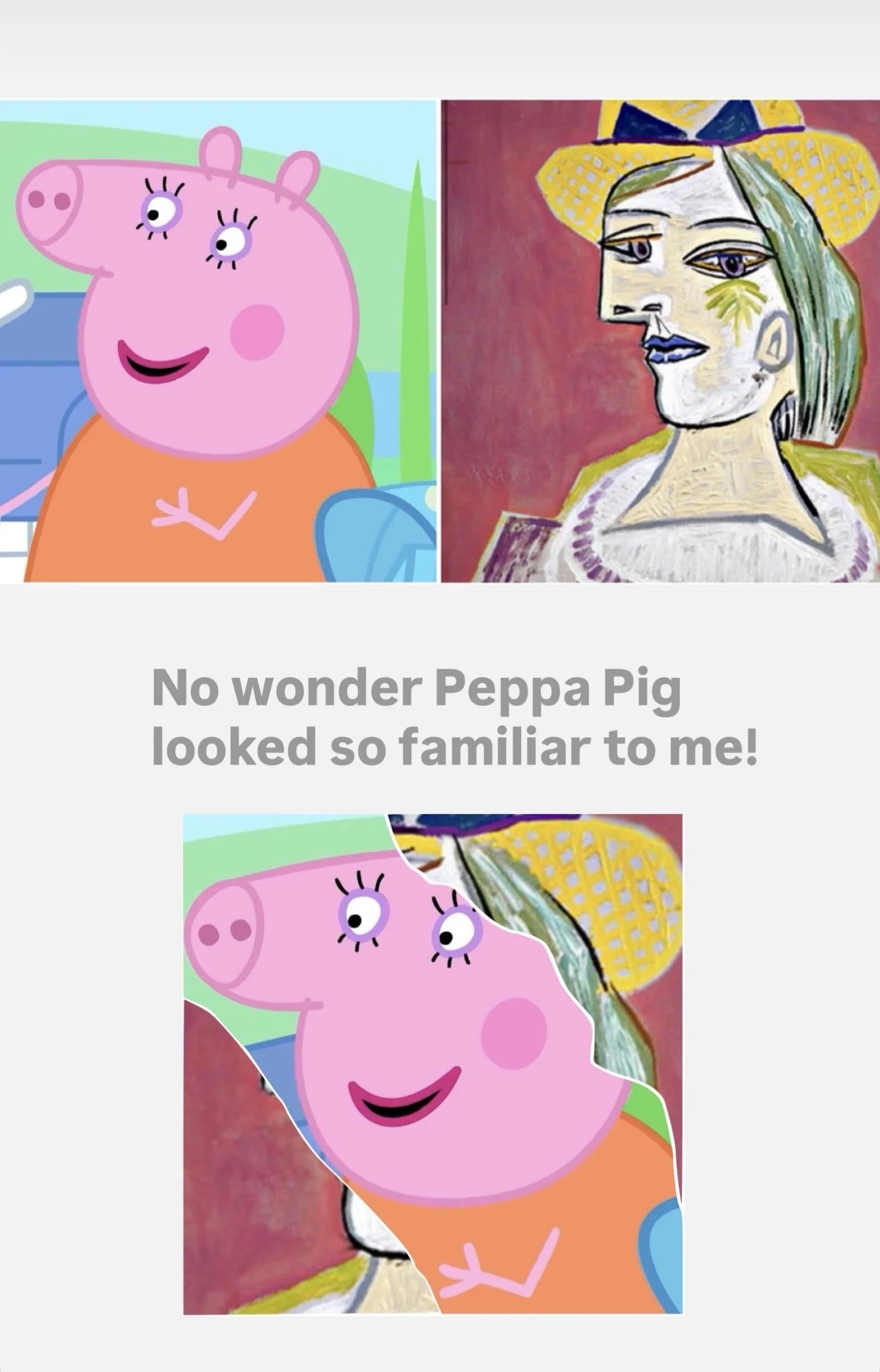
After twenty years of working in business and design, I came into the art world with a slightly different perspective. I feel that Instagram has, to some extent, influenced the art world as a whole. In fact, I think quite a large number of artists have been influenced by social media, whether consciously or unconsciously.
It makes me wonder, if Instagram didn’t exist, would the way we paint be different? Would it change the direction painting takes, or even the way artists communicate their ideas to the wider public?
Personally, I would much rather spend my time building a deeper understanding and connection between people, through genuine conversations and actually getting to know one another, rather than remaining within relationships that are measured by the number of likes on Instagram.
Even face to face, it takes time to truly get to know another person. Yet now, I feel that many people have become too reliant on carefully constructed images when forming their judgements, and as a result, our connections can become increasingly superficial. We can end up knowing an image of someone without really knowing the person.
I hope we can become more conscious of how we use technology, seeing it as a tool for connecting with one another rather than allowing it to define what we value. When people look at a painting, I want them to be able to feel a sense of warmth through the details, something that connects with their own experiences and memories, rather than simply being impressed by technical skill or a visually striking image.
I believe that an artist who is able to create work with genuine depth is, in some way, someone who regularly steps away from Instagram and social media. Perhaps it is only when we allow ourselves to step away from that constant stream of images and opinions that we can really begin to see, to feel, and to create something that comes from within.
The Garden of Uncertainty
The most peaceful people in the world are not those who have the greatest certainty in life, but those who have learned to embrace uncertainty and the unknown.
Embracing uncertainty is an essential part of an artist’s journey. It means living with self-doubt, inner conflict, and solitude more often than most. Yet the process is much like tending a garden. Day after day, you nurture what cannot yet be seen. Only when spring arrives does the garden reveal what has been quietly growing all along.
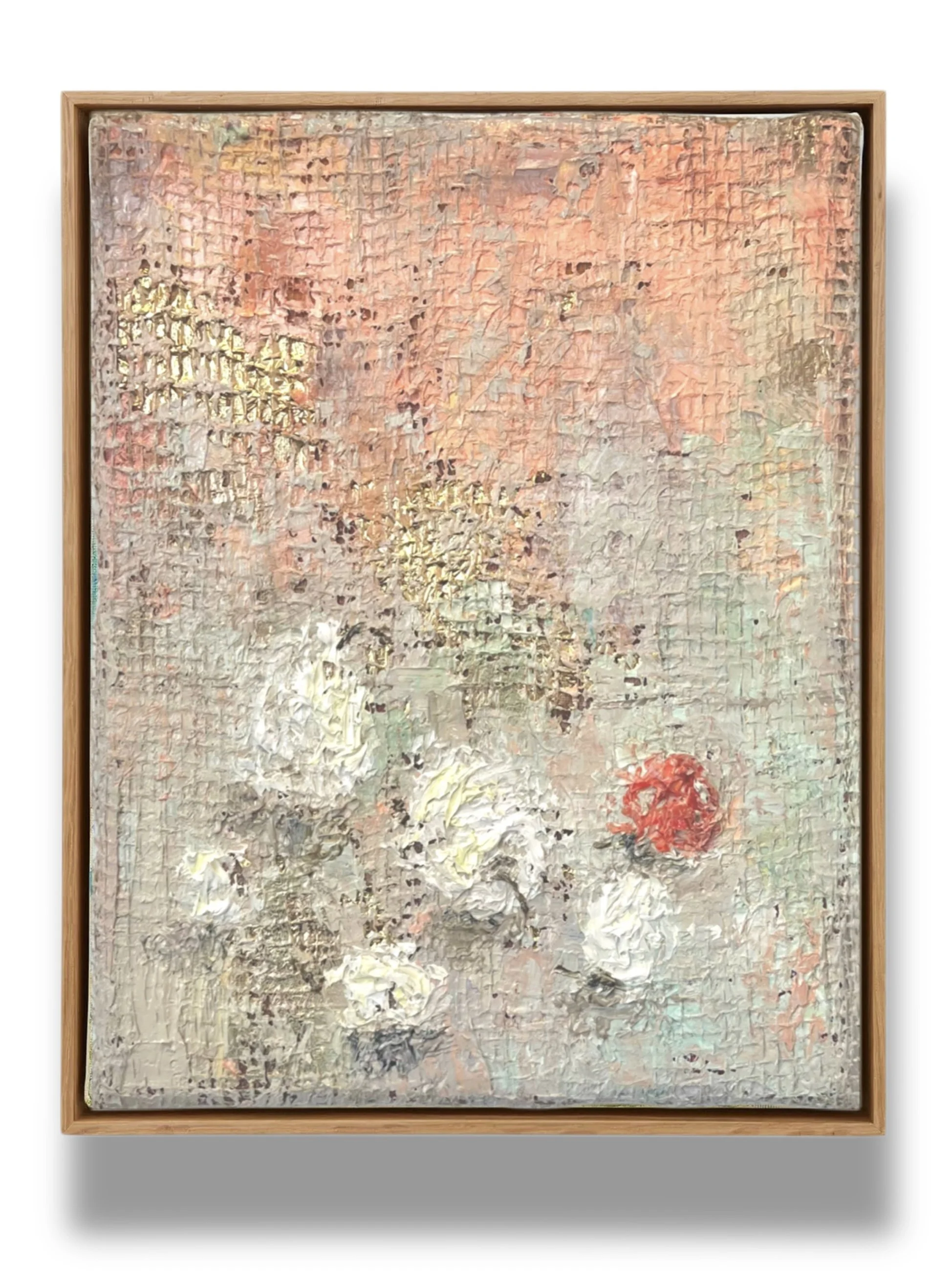
The blur gently guided me into my memories
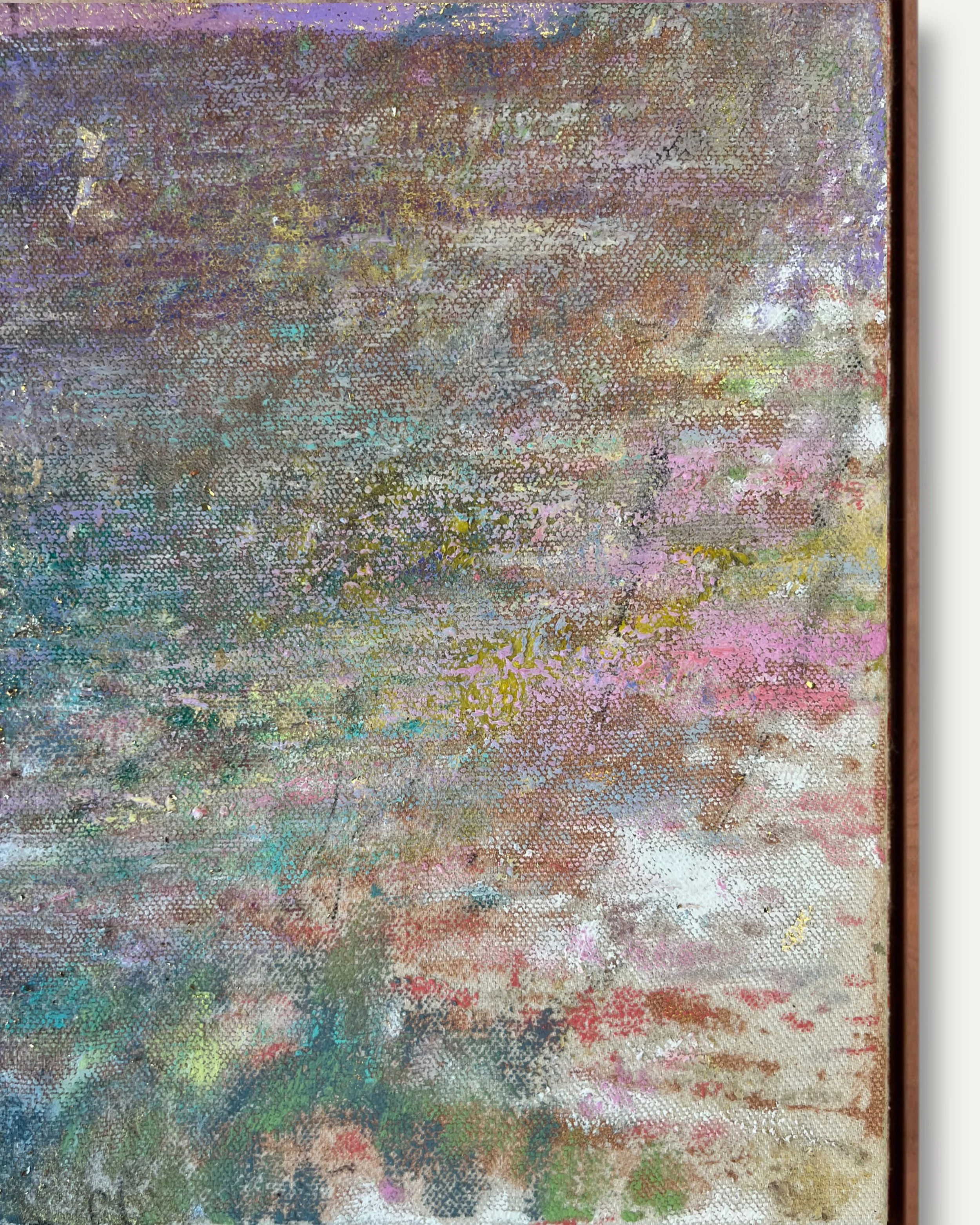
During my previous painting, I became aware of how strongly my mind was trying to control the precision of the paint. That was exactly what I didn’t want. In a way, I found out that the gold leaf introduced an absurd sense of disruption across the canvas, interrupting my rational thinking. It seemed to share the same quality as intuition. Of course, that was also my intention when I first introduced gold leaf into my work. But I didn’t anticipate that, at certain moments, it would take on a life of its own, disrupting my thoughts and interrupting the rational process of painting.
This time, I decided to work on a surface that would interfere with me even more. I tried to reassure myself. I paced back and forth around the studio, visited the café twice, and when I returned, I felt there was no longer any way to avoid the painting. I simply had to sit down and mix my colours.
As I laid down the first layers, I listened to dramatic, soaring classical music that overwhelmed my thoughts and made it difficult for my mind to take control. Gradually, something unexpected happened. As the paint mixed in unpredictable ways and the boundaries between colours dissolved into soft blurs, I found myself relaxing. I turned the music down.
Looking at the almost-white apple from my memory, everything became increasingly vivid, the humidity in the air that day, the brightness of the sitting room, and the sound of my mother’s voice. The sensation of different moments in time overlapping felt deeply warm and comforting.
Working in progress
The Sweet Fruit My Mother Brought Home
what I love is not necessarily what I like
Throughout my year at the Royal College of Art, every style I painted felt as though it disappeared from me. I want to keep painting until there is nothing left of my own ideas. Only then will I know that I have truly begun to paint.
Yet painting is not only about the pursuit of technique. Life itself matters just as much. The roads you have walked, the losses you have endured, the moments of joy and solitude you have lived through, these gradually settle into the painting and become its soul. Technique can be learnt and imitated, but a life cannot.
To me, painting is almost a form of pure faith. It is not about proving anything, nor is it about pursuing a particular style. It is a continual process of letting go of oneself and trusting the unknown. Every time I stand before a canvas, I am practising how to see again, and how to believe again.
After all, what I love is not necessarily what I like.
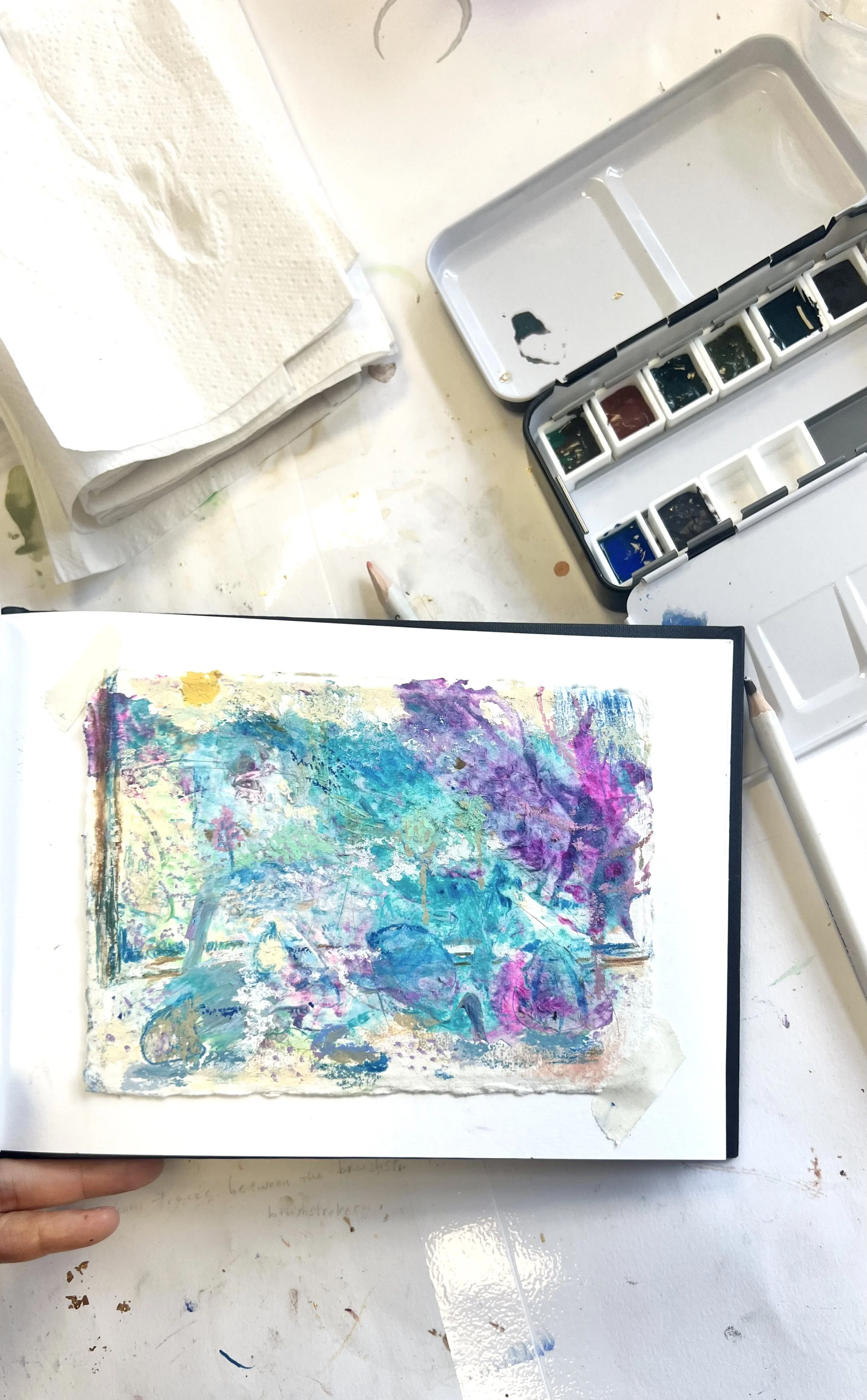
Vision isn’t as useful as I think.
When we look at the world, or at a painting, what is it that we’re really seeing? Are we interpreting it through the lens of our survival instincts, or are we observing it with a clear, unburdened gaze?
Every painter spends time in front of paintings that feel unresolved and uncomfortable. We keep painting with optimism, trusting that what looks awkward now will eventually find its way to where it needs to be. Much of painting is simply learning to live with uncertainty.
The trouble comes when we bring that same optimism to someone else’s work and dismiss it as “not much”. That can be a rather hasty judgement. More often than not, it’s the mind searching for reassurance, convincing itself that the painting can’t be all that difficult.
It’s only when you try to paint it yourself that you realise how deceptive seeing can be. What our eyes perceive, what the brain translates, and the opinions we form afterwards are, to a large extent, projections of our own responses.
With practice, those projections begin to loosen their grip. That’s where the real added value lies: not simply in becoming more skilful, but in becoming more objective.
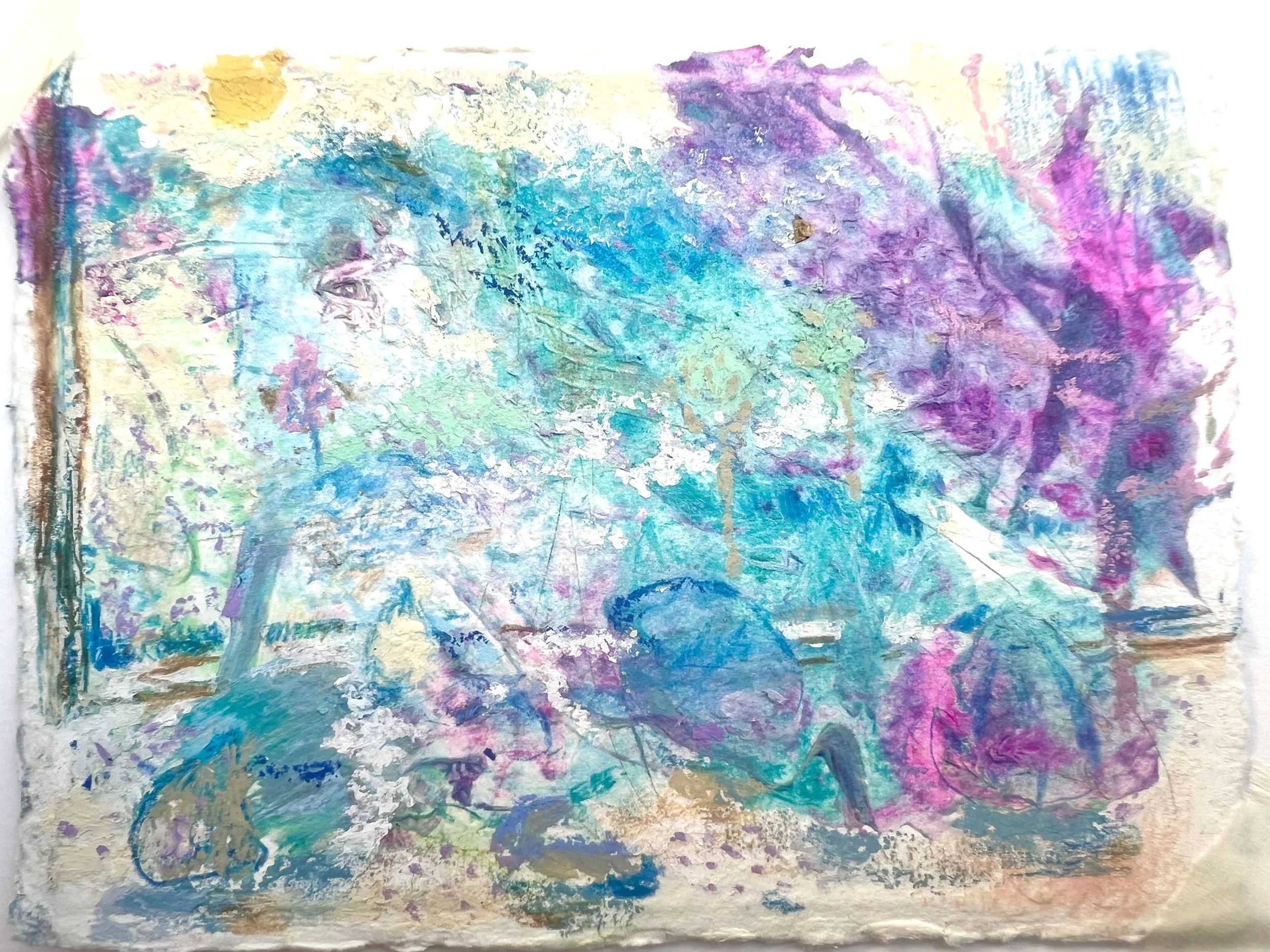
A quick sketch
the world outside of window
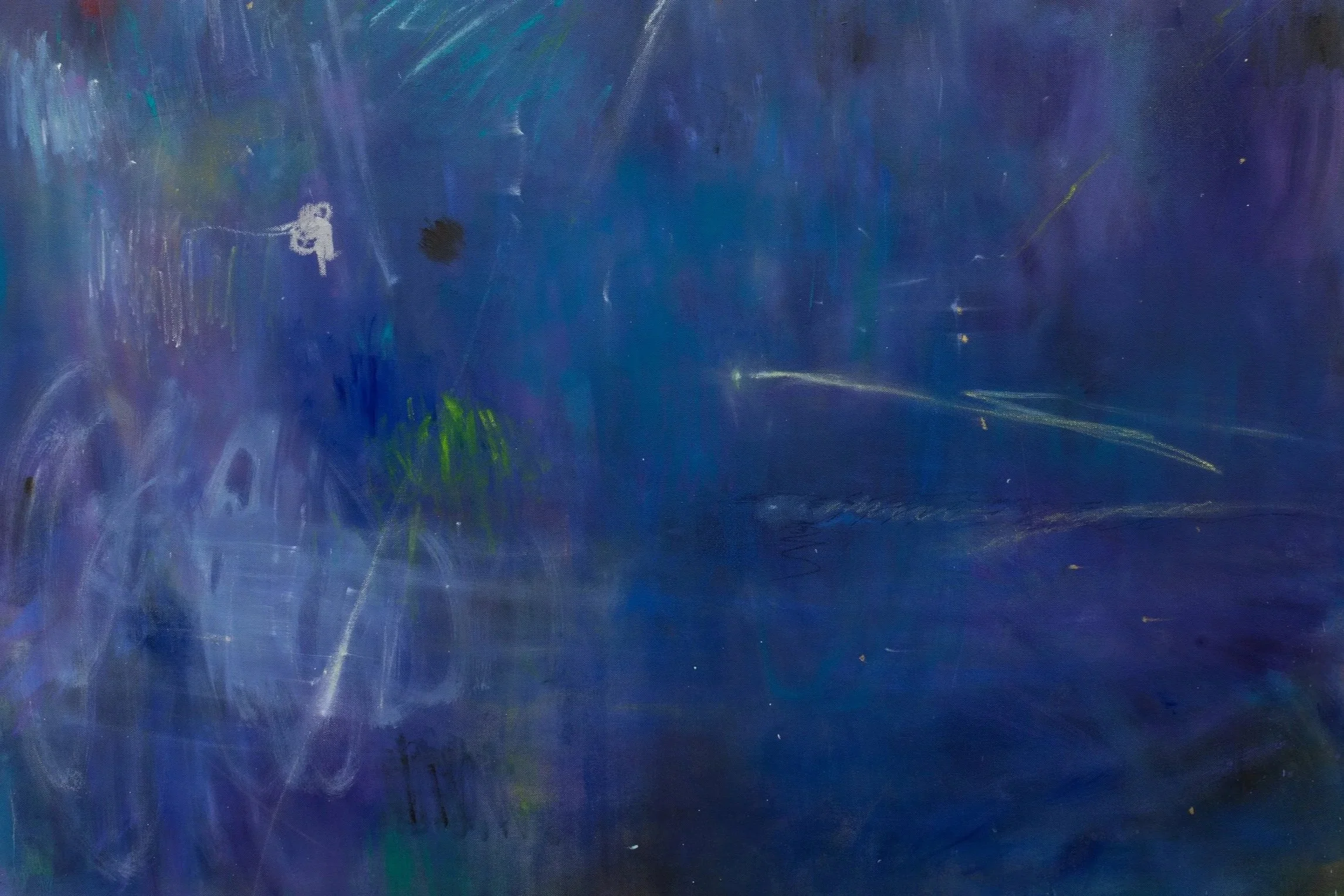
This blog traces a journey of exploration.
When I was ten years old, the thing I loved most was drawing alone. I would lose myself in the rich landscapes of my imagination, where everything felt open and free.
Life then led me elsewhere. I spent nearly twenty years working in business and the construction industry before, quite unexpectedly, finding my way back to painting. Returning to it has felt less like picking up where I left off, and more like being born into the world for a second time.
During my year at the Royal College of Art, I picked up my brushes again and began quietly exploring my inner world. I came to know each pigment as though it were a member of the family. Through books, notes and writing, I found companionship with artists from different places and different centuries, whose thoughts and works gradually became part of my own journey.
Today, one of my greatest joys is simply standing in the National Gallery and looking at paintings. Compared with the person I was a year ago, something has changed. I no longer feel that those painters belong only to history. Through the traces of their brushstrokes, I feel that I have met them. They have not disappeared from this world; they continue to live through the work they left behind. That realisation has surprised me more than I could ever have imagined.